
The Marriage Under Hunger
Hansel and GretelThe Woodcutter’s marriage becomes the channel through which the Stepmother’s demand overcomes his initial resistance to abandoning the children.
increasing Bearing strength in each event
 decreasing
Bearing strength in each eventdecreasingA Divided Household
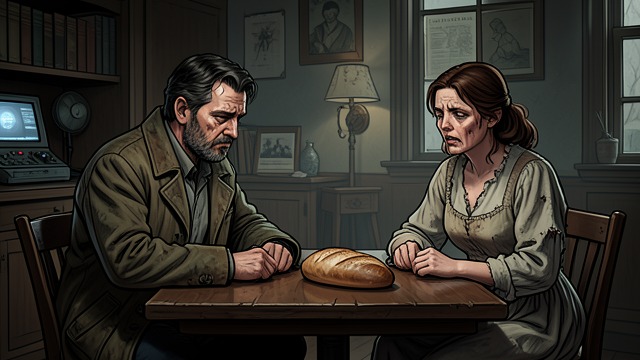
A Divided Household
Family after loss
The Woodcutter has married again after the children’s mother dies. The story introduces his new household during a period of severe poverty.
The marriage places Hansel and Gretel in a family shaped by the relationship between their father and the Stepmother. Their security depends on decisions made by those adults.
Scarcity becomes pressure
Hunger gives the Stepmother an argument for removing the children. The Woodcutter’s affection conflicts with the pressure she applies.
Persuasion and Consent

Persuasion and Consent
Unequal resolve
The Woodcutter says he will not abandon the children because he loves them and fears the forest. The Stepmother insists that the family cannot otherwise survive.
Her repeated argument changes his decision. The marriage becomes the immediate setting in which his resistance is overcome.
A choice with consequences
The adults agree to leave the children. The Woodcutter’s consent preserves the marital decision at the cost of his responsibility toward Hansel and Gretel.
The Marriage’s End
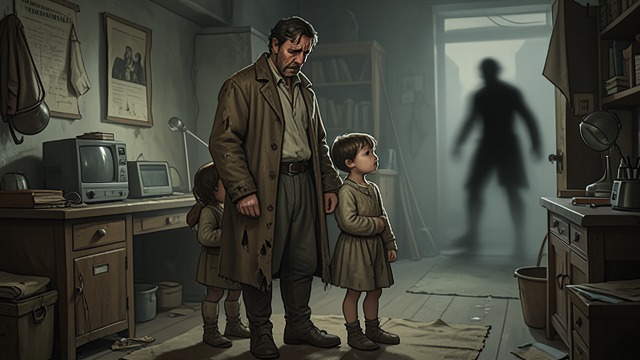
The Marriage’s End
A changed household
After the children escape the Witch, the Woodcutter reports that the Stepmother has died. The story marks the end of their marriage without describing her death.
Her absence removes the adult who led both abandonment plans. The Woodcutter and children can reunite without her continuing presence.
A father alone with regret
The Woodcutter welcomes the children and acknowledges, through his long remorse, the weight of his earlier choice. Their return reshapes the family he now leads.
before the first abandonment
the first night of the crisis
by the final homecoming
